ARNSF explores foreign policy
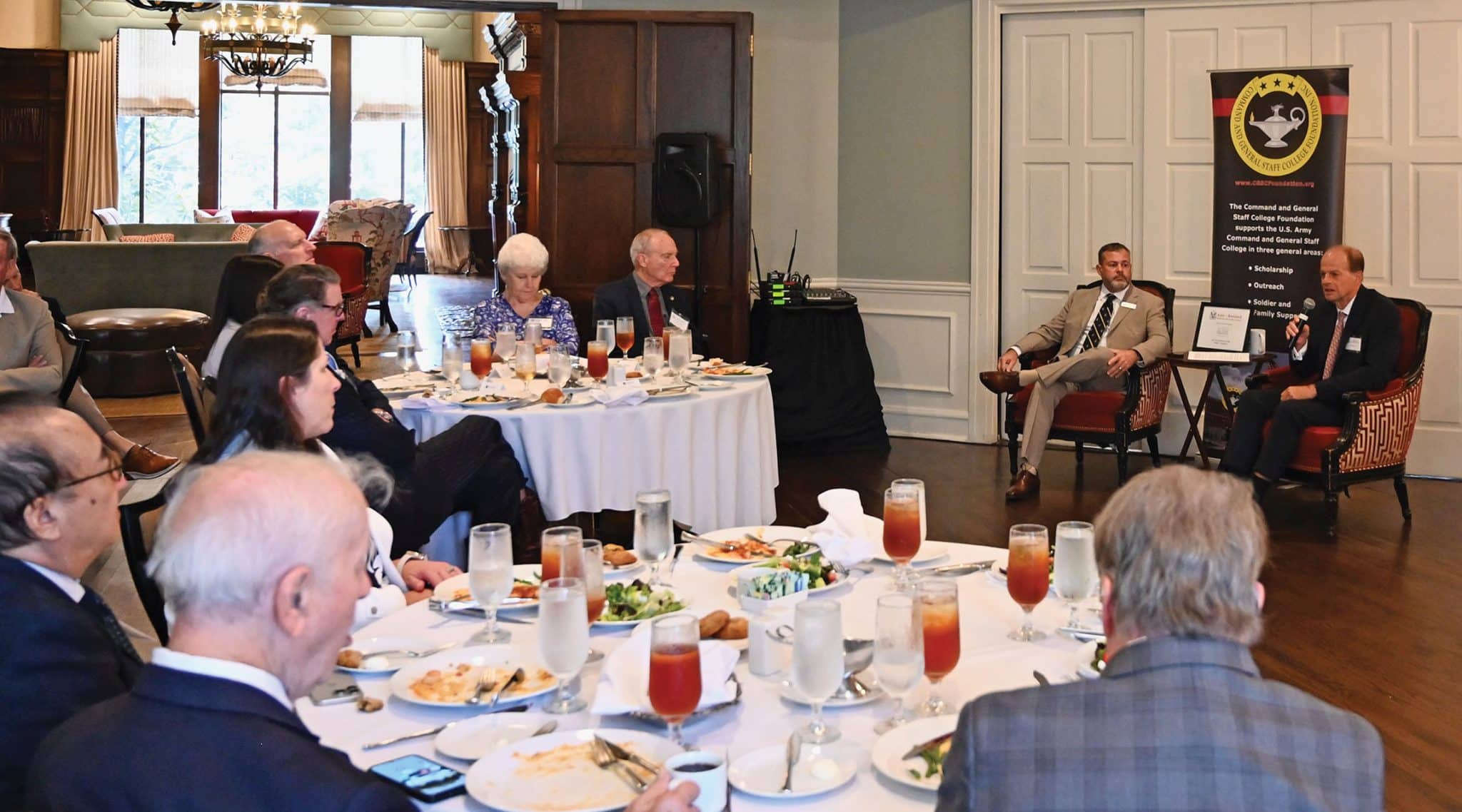
The CGSC Foundation and Alumni Association and its Simons Center hosted an Arter-Rowland National Security Forum luncheon event on Sept. 17, 2026, at the Carriage Club in Kansas City. The featured guest was Tom Sheehy, principle of Quinella Global.
The CGSC Foundation’s Simons Center Director and ARNSF program leader Col. (Ret.) Todd Schmidt kicked off the Forum welcoming the ARNSF members and their guests. After lunch, he introduced Sheehy, then facilitated the discussion with him in a “fireside chat” format.
Sheehy opened the discussion providing some of his background and experience in Africa. His discussion focused initially around U.S. foreign policy in Africa, explaining that the U.S. had tremendous interests in Africa during the Cold War in competition with Russia. He pointed out that since the end of the Cold War, while U.S. interest in Africa has waned, China has become very active in many countries on the continent, building roads, ports and airports and in return receiving mining concessions and other compensation. He said the U.S. is back in the arena trying to bolster U.S. companies’ activities in competition with China, but is at a big disadvantage at this point.

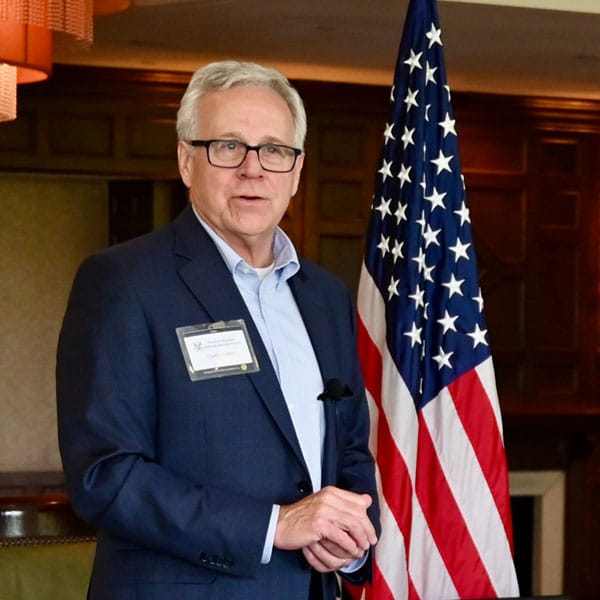
(Top photo and above) Tom Sheehy, principle of Quinella Global, discusses U.S. foreign policy during the Arter-Rowland National Security Forum luncheon event at the Carriage Club in Kansas City on Sept. 17, 2026.
When Schmidt asked Sheehy how Africans perceived China versus the U.S., Sheehy said that because China was the only power in the world willing to invest in African countries after the Cold War, they have a different perspective on China’s ambitions than we would like to believe. China has engaged in “commercial diplomacy” where others have not. That said, he said most Africans love the idea of America, citing examples of strong U.S.-Africa cultural connections, including African athletes competing in U.S. sports and African students attending U.S. academic institutions — areas in which China does not engage. He said the Chinese commercial model works for them because they bring in Chinese workers on projects instead of hiring Africans and their price points are well below what U.S. companies could offer. Sheehy said it’s complex, but not impossible for the U.S. to compete, we just have to do a better job understanding what their interests are and learning how to better conduct a U.S. version of commercial diplomacy.
Sheehy explained the U.S. must learn how to subsidize U.S. companies’ activities in foreign countries, pointing out that many European and Asian countries have subsidized their own firms. Sheehy said if the U.S. is going to compete with these other countries for resources we may have to help our own firms in that regard, despite his reservations that subsidizing our firms may give rise to cronyism. His opinion is that the free market would be the most desirable route.
Sheehy said you could make an argument that China does good things in Africa by building infrastructure, whereas the Russians do none of that. Russia operates on a very predatory level, he said, adding that they create chaos and then thrive on it with diamond and mineral concessions. “If Russia is in your country in Africa, then nothing good is happening,” he said.
Schmidt asked Sheehy about the current administration’s approach to Africa, citing the dismantling of USAID and the U.S. Institute for Peace, and how the U.S. may be turning the corner a bit. Sheehy said USAID’s medical programs had created enormous good will on the African continent, especially with the fight against HIV/AIDS. He thinks there is American will to support such efforts, but that the problem is that foreign aid has too many objectives. He said he hopes that, over time, we can rebuild our foreign aid program by reducing the number of objectives and focusing the aid we provide in Africa and elsewhere.
At the end of the discussion, Schmidt opened the floor for questions. After the Q&A period he presented Sheehy with a small gift in appreciation for his time with the Foundation and its audiences.
For more photos see the CGSC Foundation Flickr album
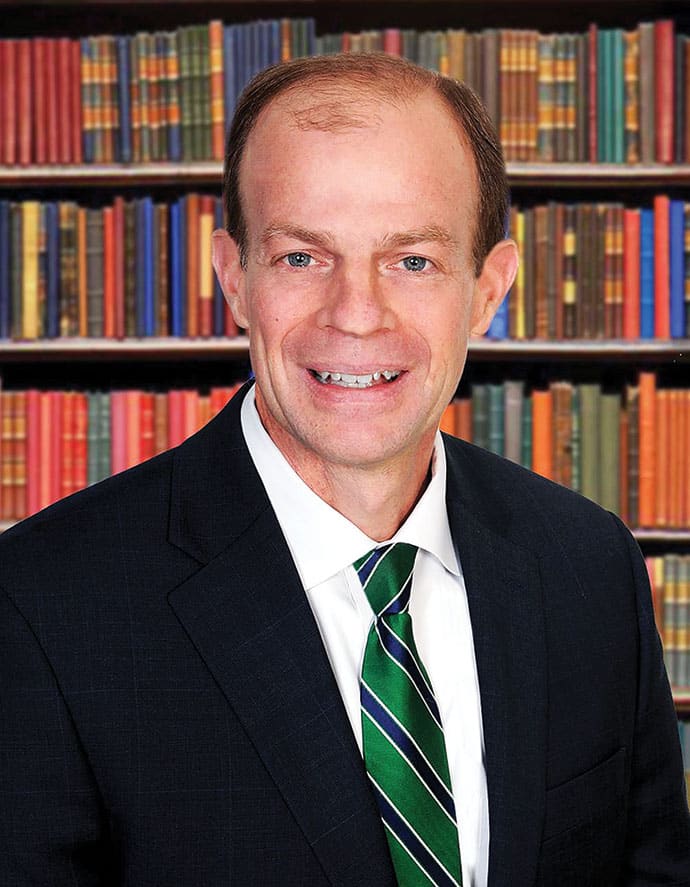 Tom Sheehy is the principal of Quinella Global, a public policy consultancy. He also serves as a senior advisor at KRL International, a boutique consultancy providing comprehensive, client-fit services to bridge the divide between Washington, D.C. and the world’s emerging markets, with a particular focus on business development in Africa.
From 2019-2025, Sheehy was a distinguished fellow at the U.S. Institute of Peace, where he served as executive director of its senior study group report, Critical Minerals in Africa. Sheehy served for more than 20 years on the staff of the Committee on Foreign Affairs in the U.S. House of Representatives, where he was staff director from 2013-2019, overseeing committee operations and legislative activity. His time on the committee included serving as staff director of the Africa Subcommittee and Trade Subcommittee. The committee played an instrumental role in developing the African Growth and Opportunity Act, landmark legislation signed into law in 2000. Before joining the committee staff, Sheehy was a policy analyst at the Heritage Foundation, where he co-developed the Index of Economic Freedom, a globally-recognized analysis of national economies, now in its 32nd edition.
Sheehy earned a bachelor’s from Trinity College in Connecticut, and an master’s from the University of Virginia.

The Arter-Rowland National Security Forum (ARNSF) is led by the CGSC Foundation and Alumni Association’s Simons Center and is an exclusive professional information sharing and networking forum for those interested in keeping abreast of relevant information about national security issues.
Members of the Forum and their guests meet periodically at guest speaker events in downtown Kansas City. National and regional guest speakers representing all elements of national power (Diplomatic, Informational, Military and Economic) highlight the meetings. The Forum is nonpartisan, but elected government officials may present from time to time.
The Forum is named after Lt. Gen. (Ret.) Robert Arter, Founding Chairman of the CGSC Foundation, and Mr. Landon Rowland, the Foundation’s first major donor who was well-known in Kansas City for his keen interest in national security issues and his leadership in business and philanthropy.
ARNSF events are only open to ARNSF members and their guests. If you are not a member but are interested in joining, contact the CGSC Foundation.
The Arter-Rowland National Security Forum is sponsored by:

Posted: September 22, 2026 by Simons Center
READ THE LATEST UPDATES FROM THE SIMONS CENTER
"*" indicates required fields